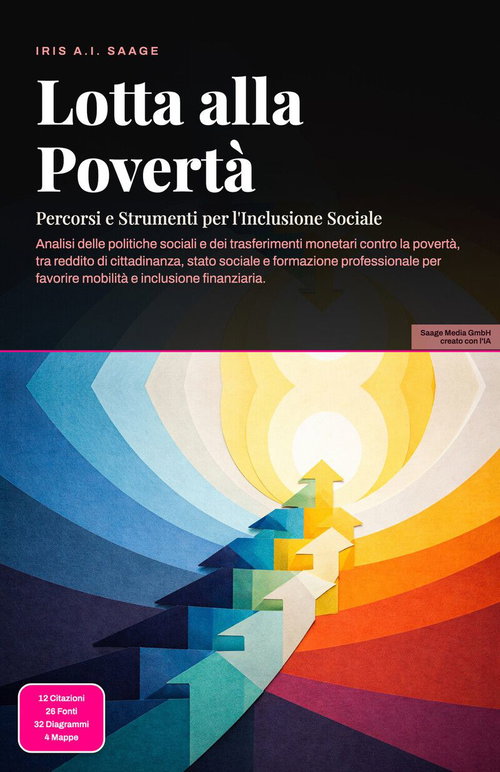
This book provides a comprehensive examination of strategies for poverty alleviation and the promotion of social mobility. It delves into the fundamental principles of social security and redistribution, analyzing various instruments of social policy.
The text explores direct financial support mechanisms such as conditional and unconditional cash transfers, and discusses the design of effective payment systems. It further addresses the strengthening of the welfare state through the expansion of social insurance systems, the establishment of needs-based social assistance, and the provision ofin-kind benefits to secure livelihoods. Innovative approaches to income security, including progressive tax policy to reduce income inequality and the promotion of asset building for low-income households, are also detailed.
Another core focus is the enhancement of educational opportunities and social participation. This includes investments in early childhood education, ensuring access to quality schooling, and creating further education opportunities for adults. The book covers measures for social inclusion, such as strengthening political participation, combating discrimination, and fostering community networks. It analyzes instruments for increasing social mobility by breaking intergenerational cycles of poverty.
The publication also addresses economic empowerment and labor market integration. It discusses the importance of skills training through dual vocational systems and practical, on-the-job training. Strategies for professional integration, including active job placement, wage subsidies, and support for micro-enterprise creation, are presented. A significant section is dedicated to securing financial inclusion by expanding access to basic banking services and implementing financial literacy programs.
Finally, the book outlines integrated strategies for poverty alleviation, emphasizing the coordination of social, educational, and labor market policies. It presents holistic approaches such as case management and the sustainable escape from poverty through preventive measures and strengthening household resilience.
For this book, we have used modern technologies – including Artificial Intelligence and individually developed software solutions. They were used in many phases of the creation process: from brainstorming and research to writing and editing, as well as quality assurance and the design of the decorative illustrations.
Our goal is to offer you a reading experience that is particularly coherent and contemporary. The content of this book is, for the most part, AI-generated.