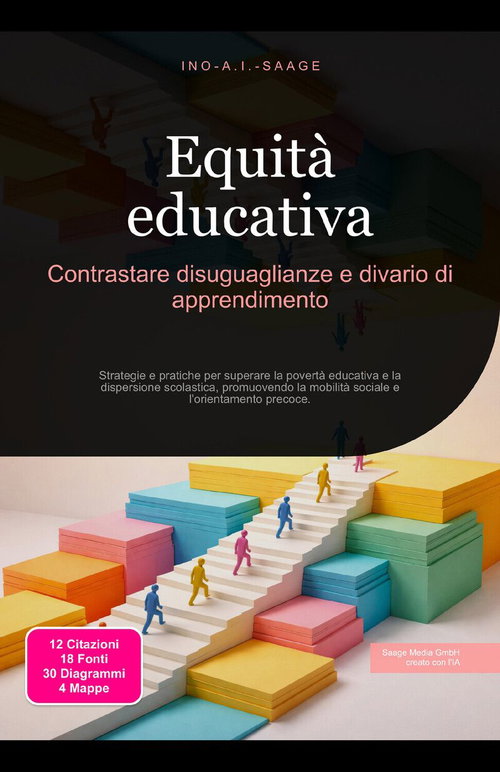
This book provides a comprehensive analysis of educational equity, examining the systemic barriers that contribute to educational inequality. It addresses the persistent achievement gap and opportunity gap, offering insights into how to foster upward mobility for all students.


The content explores the deep-rooted connections between socioeconomic status and schooling, presenting strategies to reduce the impact of a student's background on their educational success. It delves into institutional challenges such as school segregation and tracking in schools, and discusses measures to counteract these phenomena.A central theme is the fair and effective allocation of resources, with a focus on Title I schools and the implementation of social index models to support schools in high-need areas.
Furthermore, the book outlines approaches to creating just educational institutions, from establishing an inclusive school culture to adapting structural frameworks like all-day schooling. It highlights the importance of access to early childhood education as a foundational step toward equal opportunity. The text also focuses on supporting individual educational paths, with particular attention to first-generation students. It covers strategies for designing fair transitions between educational levels, into higher education, and from school to career, including mentoring programs and support systems to ensure student success.
For this book, we have used modern technologies – including Artificial Intelligence and individually developed software solutions. They were used in many phases of the creation process: from brainstorming and research to writing and editing, as well as quality assurance and the design of the decorative illustrations.
Our goal is to offer you a reading experience that is particularly coherent and contemporary. The content of this book is, for the most part, AI-generated.