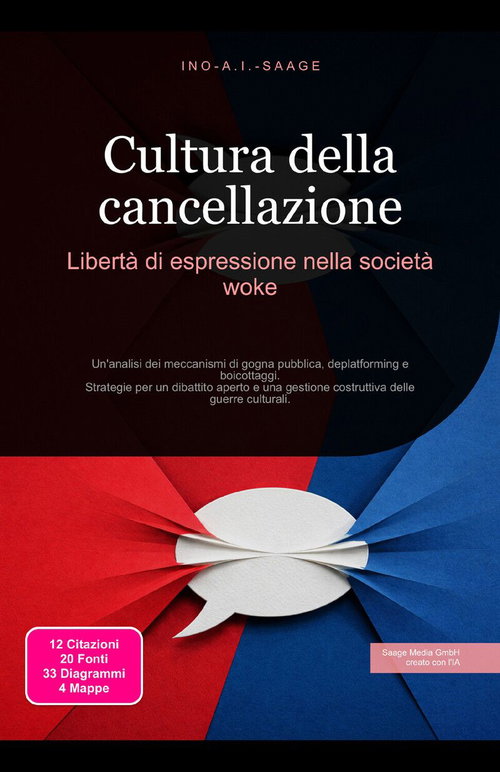
This book provides a detailed examination of the mechanisms and consequences of cancel culture in modern society. It analyzes the various forms of public shaming that have become prevalent in the digital age, from the dynamics of online mobs to the instrumentalization of call-out culture by interest groups.
The content delves into the specific tactics employed, such as deplatforming and organized boycott campaigns, and explores their impact on the individuals targeted. It also sheds light on the broader implications for public discourse, including the narrowing of acceptable opinions and therise of self-censorship.
Furthermore, the book offers strategies for individuals to navigate this complex environment. It outlines preventive communication strategies, such as building a resilient online identity and using de-escalation techniques. For those who find themselves in a crisis, it presents potential response options, including immediate actions to address personal attacks and the development of a public defense strategy. The role of legal protections is also considered.
By exploring the ideological drivers behind the culture wars and the erosion of open debate, this work aims to provide a comprehensive understanding of the current climate. It discusses the tension between free speech and social responsibility and the role of private platforms as regulators.



The final sections are dedicated to fostering a more constructive and open debate. They present principles for productive discourse, such as tolerance for ambiguity and the separation of person from argument, and suggest institutional approaches like creating protected spaces for discussion and strengthening media literacy. The goal is to contribute to a society where differing viewpoints can be discussed openly and respectfully.
For this book, we have used modern technologies – including Artificial Intelligence and individually developed software solutions. They were used in many phases of the creation process: from brainstorming and research to writing and editing, as well as quality assurance and the design of the decorative illustrations.
Our goal is to offer you a reading experience that is particularly coherent and contemporary. The content of this book is, for the most part, AI-generated.