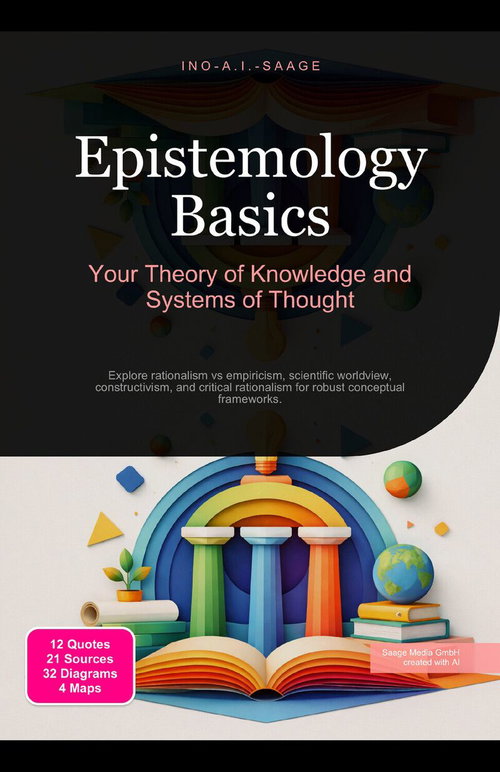
This book offers a structured introduction to the fundamentals of epistemology and the analysis of your personal systems of thought. It guides you in examining the foundations of your own beliefs, values, and the conceptual frameworks that shape your perception of the world.


Explore the core questions of philosophy concerning the theory of knowledge. The text delves into the classic debate of rationalism vs empiricism, presenting methods for both logical deduction and the systematic evaluation of sensory experience. You will learn to differentiate between opinion, belief, and justified knowledge,and to assess the reliability of information sources.
A central focus is the development of a scientific worldview. This includes understanding the principles of testable hypotheses, the concept of falsifiability as a tenet of critical rationalism, and the criteria that distinguish scientific from pseudoscientific claims. The book also discusses the roles of logical positivism in clarifying language and constructivism in interpreting reality.
Furthermore, the content addresses the dynamics of knowledge, including how to identify and question prevailing paradigms. Learn about the mechanisms of paradigm shifts and how to cultivate intellectual flexibility. The work provides approaches for integrating new findings into your existing cognitive schemas and for managing the continuous evolution of your understanding. This exploration into epistemology is designed to help you build more robust and reflective conceptual frameworks for navigating a complex world.
For this book, we have used modern technologies – including Artificial Intelligence and individually developed software solutions. They were used in many phases of the creation process: from brainstorming and research to writing and editing, as well as quality assurance and the design of the decorative illustrations.
Our goal is to offer you a reading experience that is particularly coherent and contemporary. The content of this book is, for the most part, AI-generated.