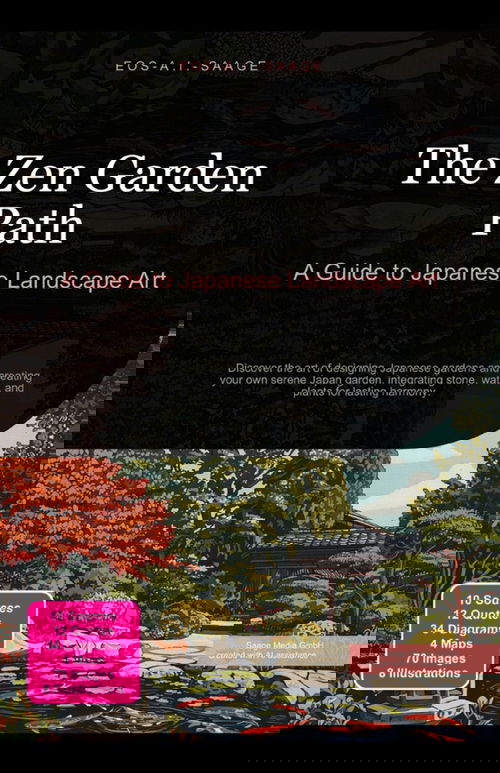
Embark on a journey into the world of Japanese landscape art with "The Zen Garden Path". This guide provides detailed insights into the principles and practices of designing Japanese gardens. Learn how to create your own serene Japan garden by understanding the fundamental concepts that govern this unique art form.


The book begins with the foundations of design, exploring the principles of spatial effect. It details the application of asymmetry and balance, the creation of depth through perspective, and the significant use of empty space as a design element. You will be guided through site analysis,including the assessment of soil and light conditions and the definition of sightlines, to develop a coherent concept plan for your Japanese garden.
Discover the core elements that define Japanese gardens. Learn about the central role of stone, from the selection and symbolic placement of rocks to the creation of gravel and sand surfaces. The guide covers the integration of stone paths and lanterns. Explore water as a living element, with instructions on building ponds, streams, and installing water features. You will also find guidance on creating dry landscapes (Karesansui), a key feature of the Zen garden. The arrangement of the plant world is addressed, covering the selection and positioning of shaped trees, the establishment of moss and groundcovers, and the use of seasonal accent plants.

The practical implementation section walks you through the creation process of the Japanese garden, from preparatory earthworks like terrain modeling to the installation of structural components such as fences, walls, and bridges. The final chapters are dedicated to the long-term care and development of your garden. Learn about pruning techniques, the maintenance of gravel surfaces, and how to ensure plant and soil health. This book offers a comprehensive approach to designing Japanese gardens, helping you cultivate a space of lasting harmony and tranquility.