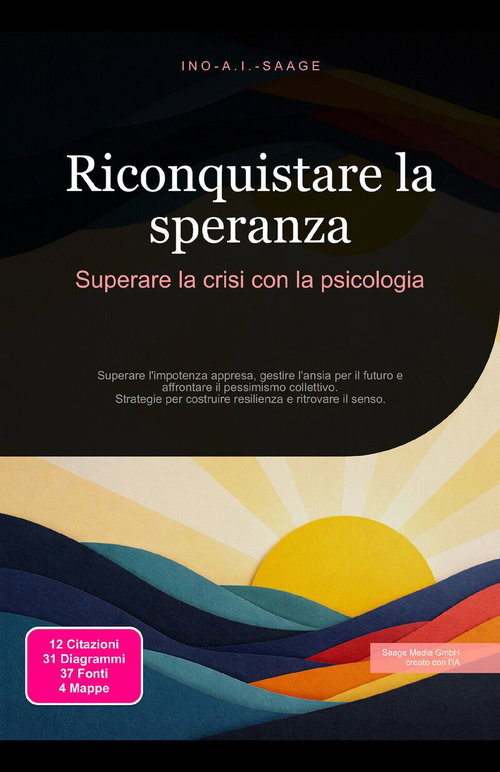
In a world increasingly marked by uncertainty and complex challenges, many individuals experience a profound crisis of hope. The Psychology of Hope: Overcoming the Crisis of Hope addresses this widespread phenomenon, offering a structured exploration of the psychological forces that undermine our sense of a positive future.
This book provides a detailed examination of the key elements contributing to this crisis, including the dynamics of learned helplessness, the pervasive nature of future anxiety, and the personal struggle of a crisis of meaning. It analyzes how societal pressures,such as collective pessimism and climate anxiety, can intensify these feelings, leading to a loss of meaning and orientation.
Moving from analysis to action, the guide lays out the foundations for rebuilding a solid sense of hope. It delves into the psychology of hope, focusing on developing a future-oriented mindset and cultivating realistic optimism. You will learn about building resilience by establishing emotional stability, accepting difficult feelings, and applying techniques for emotional self-regulation.

A central part of the book is dedicated to practical tools and interventions. It introduces cognitive hope interventions designed to foster solution-oriented thinking and behavior-based strategies that encourage the active shaping of one's daily life. These approaches help in setting and achieving small, manageable goals. Furthermore, methods for strengthening personal resilience are discussed, including the role of social support and mindfulness practices in navigating setbacks.
The final sections focus on sustaining hope over the long term, especially during times of crisis and in the face of global challenges. The content explores how to establish personal hope rituals, manage fluctuations in optimism, and build a supportive community. It addresses the importance of focusing on one's own sphere of influence to counteract feelings of powerlessness and shows how shared action can become a powerful source of confidence.
For this book, we have used modern technologies – including Artificial Intelligence and individually developed software solutions. They were used in many phases of the creation process: from brainstorming and research to writing and editing, as well as quality assurance and the design of the decorative illustrations.
Our goal is to offer you a reading experience that is particularly coherent and contemporary. The content of this book is, for the most part, AI-generated.