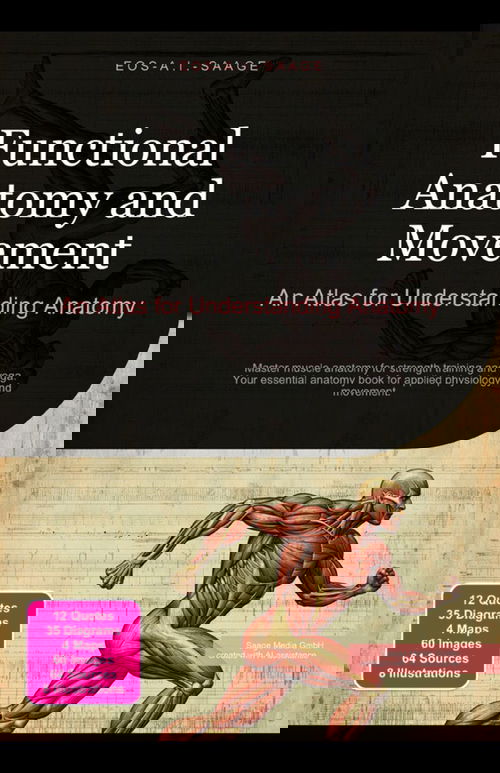
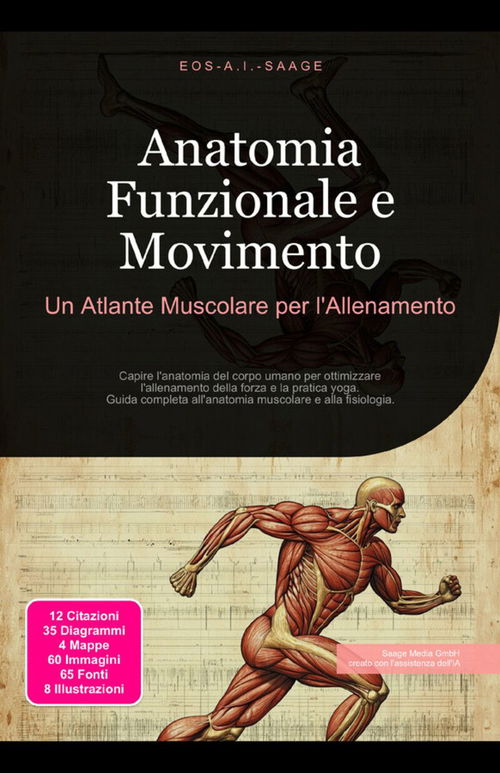
Functional Anatomy and Movement: An Atlas for Understanding Anatomy offers a detailed exploration of the human body, focusing on the principles of movement, applied physiology, and muscle anatomy. This anatomy book is structured to provide a comprehensive resource for those interested in strength training anatomy and yoga anatomy.

The content begins with foundational concepts for understanding anatomy, covering the skeletal system as the basis for posture, the interplay of the nervous and muscular systems, and the function of fascial tissue in force transmission. You will find information on joint types,motor unit control, and the role of proprioception in kinesthetic awareness.
The core of this anatomy atlas is a functional overview of the body's musculature. It systematically examines the muscle groups of the upper body, arms, lower body, and legs. Sections are dedicated to the function of the rotator cuff, the interaction of flexor and extensor muscles, core muscle control, the role of hip musculature in locomotion, and the balance between quadriceps and hamstrings. The book also delves into the deep intrinsic back muscles and their contribution to segmental stabilization.
Subsequent chapters connect this knowledge to practical application. The section on strength training anatomy analyzes fundamental exercises like squats, deadlifts, and bench presses, detailing the involved muscle chains, synergists, and stabilizers. It discusses how anatomical knowledge can inform training choices, such as selecting a range of motion for muscle activation and designing a balanced exercise program. The importance of breathing mechanics and core tension for performance and spinal safety is also addressed.
For practitioners of yoga, the yoga anatomy section provides insights into the anatomical principles of stability in standing postures, mobility in forward bends and backbends, and spinal rotations. It examines the activation of foot muscles, pelvic and spinal alignment, and the physiological effects of breath control, including the role of the diaphragm and the influence of breathing on the autonomic nervous system. This anatomy and physiology resource is designed for anyone seeking a deeper understanding of the body in motion.