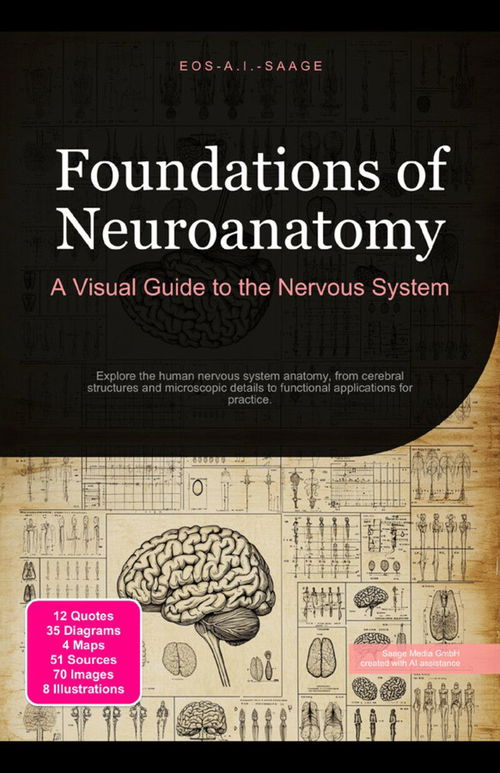
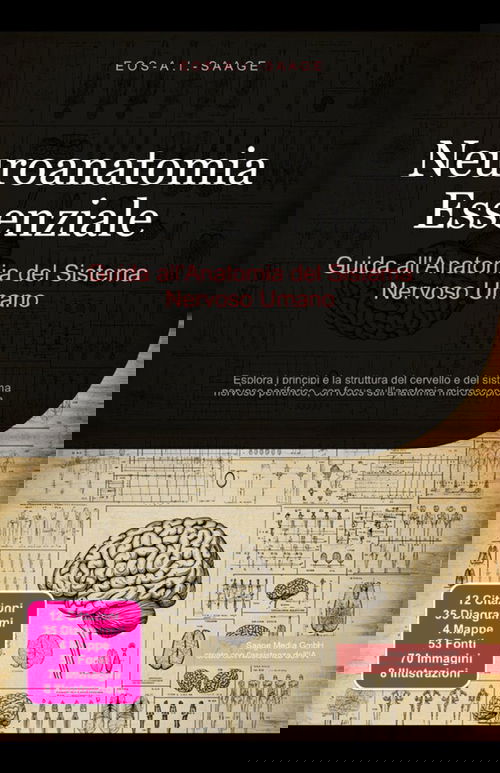
Foundations of Neuroanatomy: A Visual Guide to the Nervous System provides a detailed exploration of the human nervous system's structure and function. This guide is designed for students, practitioners, and anyone seeking a comprehensive understanding of neuroanatomy.



The book begins with the fundamental descriptive neuroanatomy, outlining the divisions of the central and peripheral nervous systems. It covers the developmental stages of the nervous system, from embryonic origins to postnatal maturation and structural plasticity throughout life. You will also find a detailed examination of thevascular supply systems, including the arterial inflow, the blood-brain barrier, venous drainage, and the circulation of cerebrospinal fluid.
A significant portion is dedicated to brain anatomy in detail. Explore the cerebral structures of the cerebrum, including the composition and function of the cerebral lobes, the organization of gray and white matter, and the localization of the basal ganglia. The guide also delves into the anatomy of the brainstem and cerebellum, as well as the structures of the limbic system, such as the hippocampus and amygdala, and their associated pathways.
The microscopic level of nervous system anatomy is thoroughly addressed, focusing on the neuron as the fundamental building block. This includes the morphology of the cell body, axons, and dendrites, as well as the structure of synapses and neural circuits. The supporting roles of glial cells, such as astrocytes and microglia, are also explained.
Finally, the book connects anatomical knowledge to practical applications. It presents the functional neuroanatomy underlying sensory perception, motor control, and higher cognitive functions. This section details the anatomical basis of vision, hearing, and somatosensation. It also explains the pathways for voluntary movement, such as the pyramidal tract, and the roles of extrapyramidal and cerebellar circuits in motor control. The structural substrates for language, executive functions, and memory are also discussed, providing a solid foundation for understanding the relationship between brain structure and behavior.