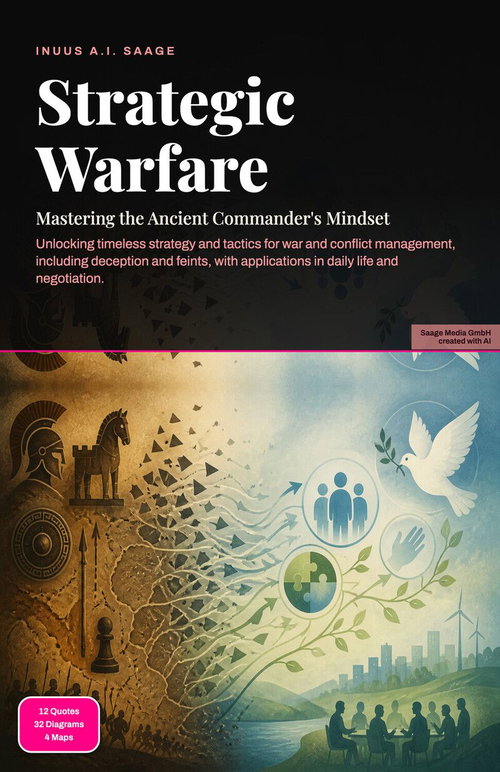
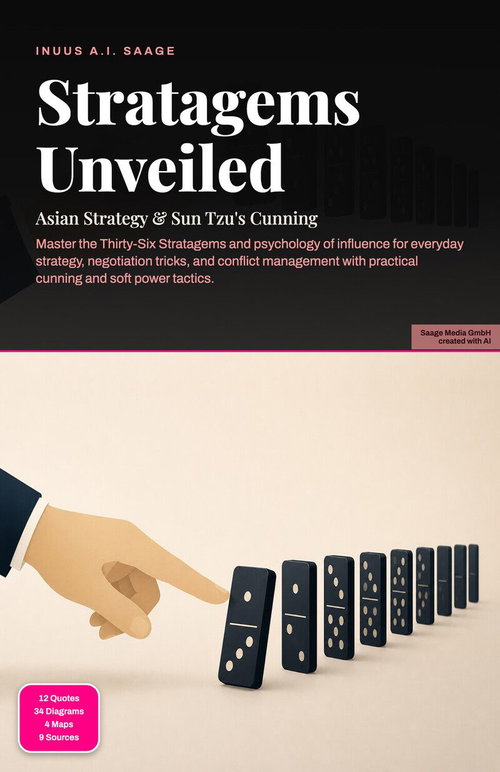
This book offers a structured exploration of the principles that have guided military leaders for centuries. It delves into the core components of a strategic mindset, beginning with the assessment of one's own strengths and the identification of an opponent's vulnerabilities. Readers will examine methods for defining clear objectives, anticipating opposing moves, and understanding the psychological dimensions of conflict, such as maintaining morale and projecting strength.


The text proceeds to detail the development of military strategy, focusing on the critical aspects of planning and preparation.This includes the management of resources and logistics, the planning of formations and maneuvers, and the gathering of information through reconnaissance. The principles discussed are grounded in the historical context of ancient military strategy.
A significant portion is dedicated to tactics used directly in conflict, with a particular emphasis on deception and feints. The book analyzes the use of feigned retreats, surprise attacks, and the importance of seizing and maintaining the initiative. It also addresses the necessity of flexibility and adaptation in response to unforeseen events on the battlefield.
Finally, the work transitions from the theater of war to practical applications in modern contexts. It shows how the foundations of ancient military strategy can be applied to daily life and can inform contemporary conflict management and negotiation tactics. This section covers de-escalation techniques, creating mutually beneficial outcomes, and the use of strategic positioning. The principles of negotiation are broken down into preparation, goal setting, and the analysis of the opposing side's interests. Readers are introduced to specific negotiation tactics, such as the principle of reciprocity and the tactical use of pauses.
For this book, we have used modern technologies – including Artificial Intelligence and individually developed software solutions. They were used in many phases of the creation process: from brainstorming and research to writing and editing, as well as quality assurance and the design of the decorative illustrations.
Our goal is to offer you a reading experience that is particularly coherent and contemporary. The content of this book is, for the most part, AI-generated.