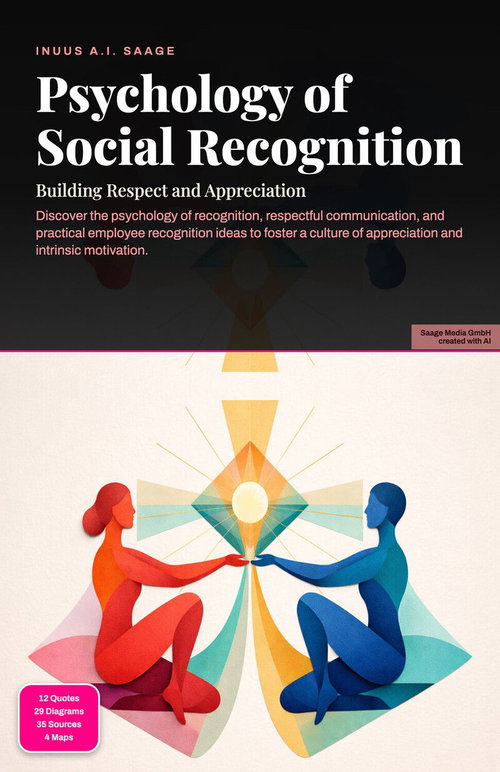
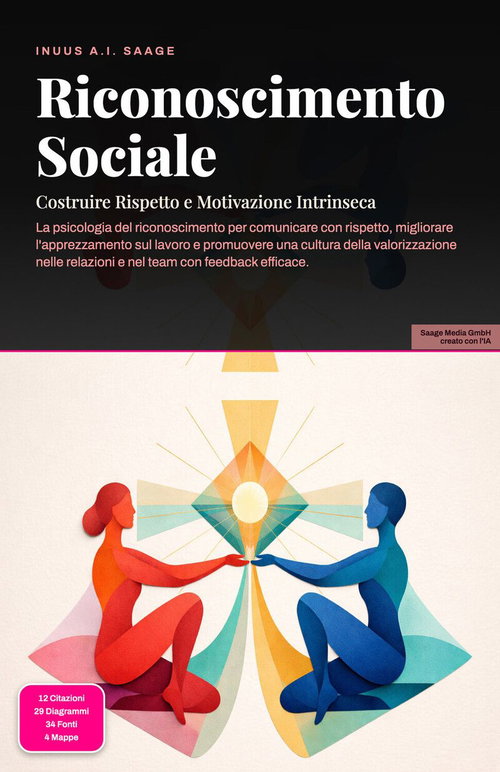
This book provides a detailed look into the psychology of social recognition and its importance in both professional and personal contexts.


Explore the psychological foundations of appreciation, starting with fundamental human needs such as belonging, autonomy, and competence. Learn how social recognition influences self-esteem and how to manage perceived deficits in appreciation. The book clarifies the distinctions between praise, recognition, and flattery, and examines the neurobiological effects of positive affirmation.
Discover practical tools for building respect and appreciation in your interactions.This includes methods for respectful communication, such as active listening and the formulation of positive messages, as well as the conscious use of non-verbal cues. The text also covers how to establish and maintain personal boundaries and acknowledge different perspectives to foster relationship respect.
In a professional setting, learn how to cultivate a culture of appreciation. The book offers insights into establishing shared values, anchoring recognition rituals within teams, and promoting mutual support. It addresses how appreciative leadership can enhance intrinsic motivation and respect. Additionally, you will find guidance on how to give better feedback, focusing on structure, timing, and location for constructive conversations. The content also includes practical employee recognition ideas to help you create a positive work environment.
Finally, the book extends these principles to personal relationships, discussing how to build respect in partnerships by validating emotional needs, in families by fostering intergenerational appreciation, and in friendships through reliability and genuine support.
For this book, we have used modern technologies – including Artificial Intelligence and individually developed software solutions. They were used in many phases of the creation process: from brainstorming and research to writing and editing, as well as quality assurance and the design of the decorative illustrations.
Our goal is to offer you a reading experience that is particularly coherent and contemporary. The content of this book is, for the most part, AI-generated.