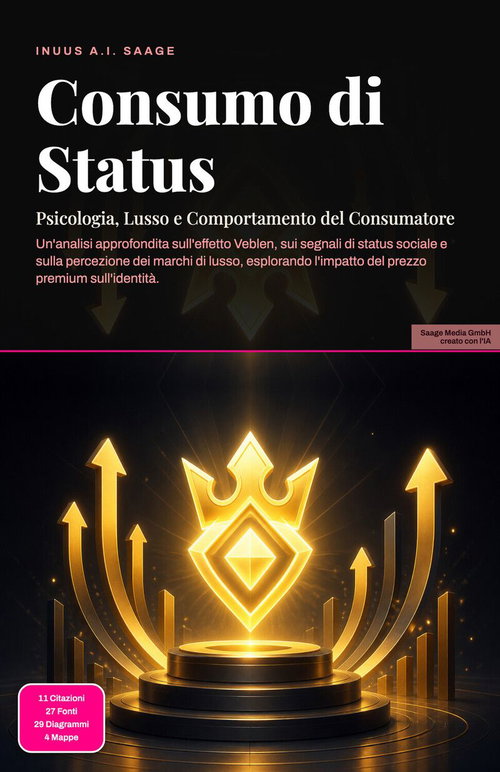
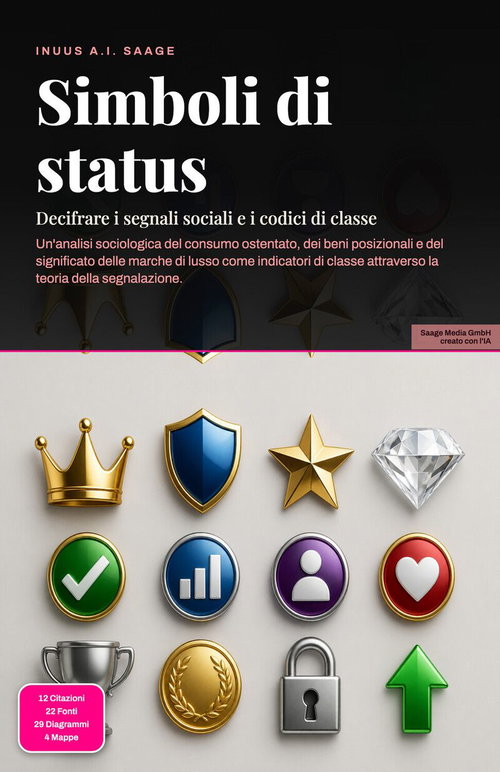
This book provides a detailed exploration into the psychology of luxury and the complex mechanisms of status consumption. It examines the fundamental drivers of luxury consumer behavior, from the evolutionary roots of signaling to the pursuit of uniqueness and self-esteem enhancement through ownership. The work sheds light on how consumers make purchasing decisions for luxury goods, analyzing the interplay between emotional and rational factors, as well as the effects of scarcity and exclusivity.

A central theme is luxury brand perception, detailing how brand myths are constructed and how statussignaling brands establish themselves as symbols of prestige. The analysis delves into the decoding of both explicit and implicit social status cues communicated by these brands. Furthermore, the book addresses the intricacies of premium pricing psychology, including the Veblen effect, where higher prices can increase demand, and how price serves as an indicator of quality, influencing the subjective consumer experience.
The content also covers modern desire creation strategies used in marketing. This includes an examination of neuromarketing luxury, exploring how the brain's reward system is activated and how multisensory approaches create emotional brand connections. Finally, the relationship between wealth and identity is considered, offering a perspective on reflecting upon personal consumption drivers and developing an authentic sense of self that is independent of material possessions. The discussion includes strategies for mindful consumption and aligning financial planning with personal values.
For this book, we have used modern technologies – including Artificial Intelligence and individually developed software solutions. They were used in many phases of the creation process: from brainstorming and research to writing and editing, as well as quality assurance and the design of the decorative illustrations.
Our goal is to offer you a reading experience that is particularly coherent and contemporary. The content of this book is, for the most part, AI-generated.