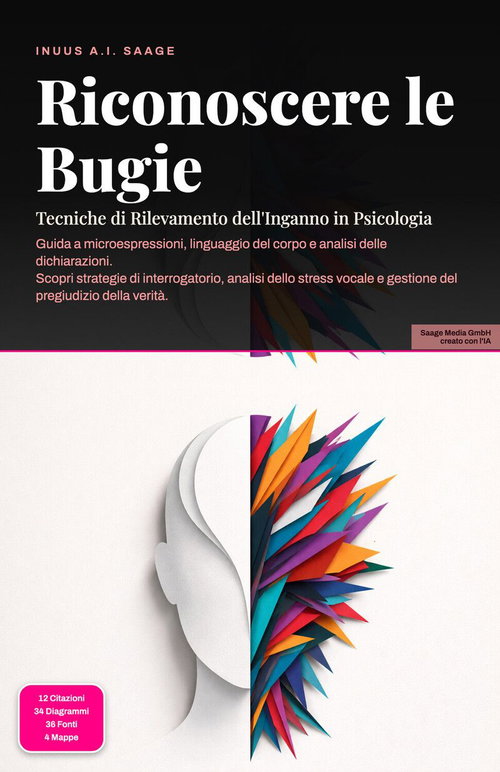
This book provides a structured approach to understanding and spotting deception. It guides you through the foundational principles of behavioral observation, beginning with the importance of establishing a person's baseline behavior. You will learn practical methods to assess an individual's normal conduct and how to recognize significant deviations from it.
The content addresses common psychological pitfalls in perception, such as the truth bias and confirmation bias, offering strategies to overcome these cognitive hurdles for a more objective analysis. It also covers the significance ofcultural differences in communication and the skill of active listening to capture information that goes beyond spoken words.
A significant portion is dedicated to the analysis of nonverbal communication. This includes the interpretation of body language cues, from gestures and posture to the study of proxemics. You will gain insights into identifying the seven universal microexpressions as indicators of genuine emotion and learn to differentiate between authentic and feigned emotional displays. The guide also details the analysis of eye contact patterns, pupil dilation, and blink rates under stress.

Furthermore, the book explores verbal and paraverbal signals. It presents the fundamentals of voice stress analysis, explaining how changes in pitch, speech rate, and the use of filler words can signify cognitive effort or emotional arousal. You will learn about statement analysis, focusing on identifying contradictions, evaluating the level of detail in a narrative, and analyzing sentence structure for indicators of deception.
Finally, the guide outlines active strategies for lie detection, including strategic interrogation tactics like asking unexpected questions and methods designed to increase a subject's cognitive load. It introduces principles from statement psychology for validating accounts, such as criteria-based content analysis and consistency checks, to support a more thorough evaluation of truthfulness.


For this book, we have used modern technologies – including Artificial Intelligence and individually developed software solutions. They were used in many phases of the creation process: from brainstorming and research to writing and editing, as well as quality assurance and the design of the decorative illustrations.
Our goal is to offer you a reading experience that is particularly coherent and contemporary. The content of this book is, for the most part, AI-generated.